Dynalite Makes Its Own Light

© Peter Poremba

To all the ships at sea, if there’s one thing I’ve learned in my years as a photographer and  filmmaker, it’s that I don’t have all the answers. Hopefully, I’m smart enough to go to the people that do have the answers. Peter Poremba, the CEO, president, and senior electrical engineer of Dynalite was kind enough to go to Malibu on two separate occasions, and with the minimum amount of equipment he was able to light 30% of the arena: just one light and one power pack (if it was for SI, he would have brought in six power packs and eight lights). The combination of the electronic flash and the hypersync on my Canon 7D and Peter’s Nikon D7000 made for some photos that could not be taken back in the day. Some of the other photos in this blog I threw in just because I wanted to, will have a follow up.

Tech information: triggering device was the new Pocket Wizard Flex, power pack MP800, SH2000 Studio Head, SP-45 reflector, Nikon 85mm 1.4 lens, Canon 135mm lens.

Nikon D7000 exposures: 1/800 of a second, ISO 400, f4

Canon 7D exposures: 1/1200 of a second, ISO 500, f4.5
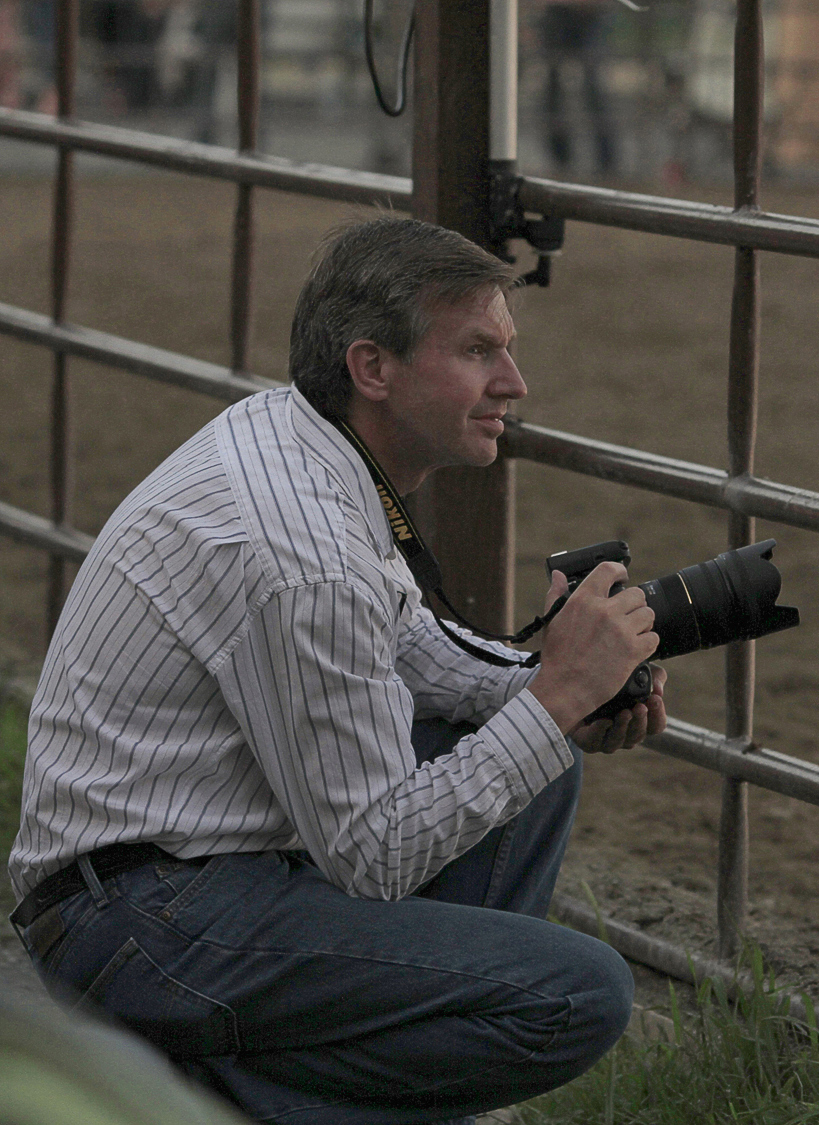
Peter Poremba, © Joe DiMaggio
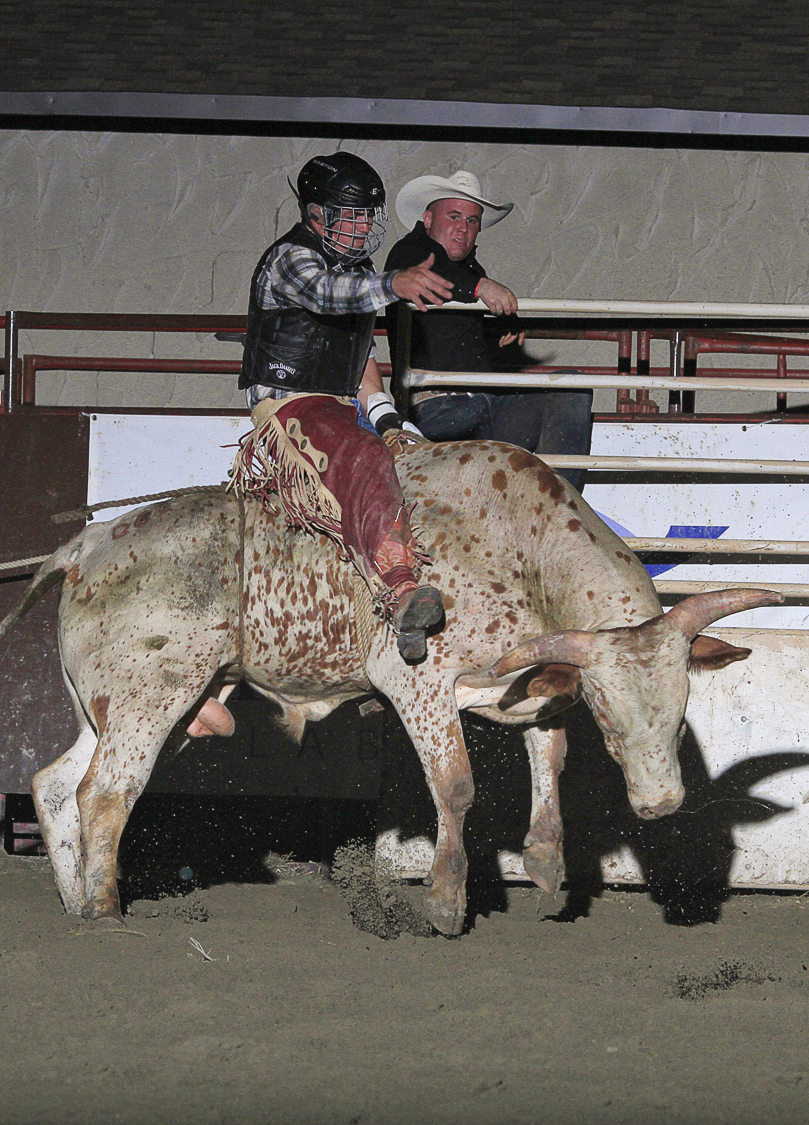
© Joe DiMaggio
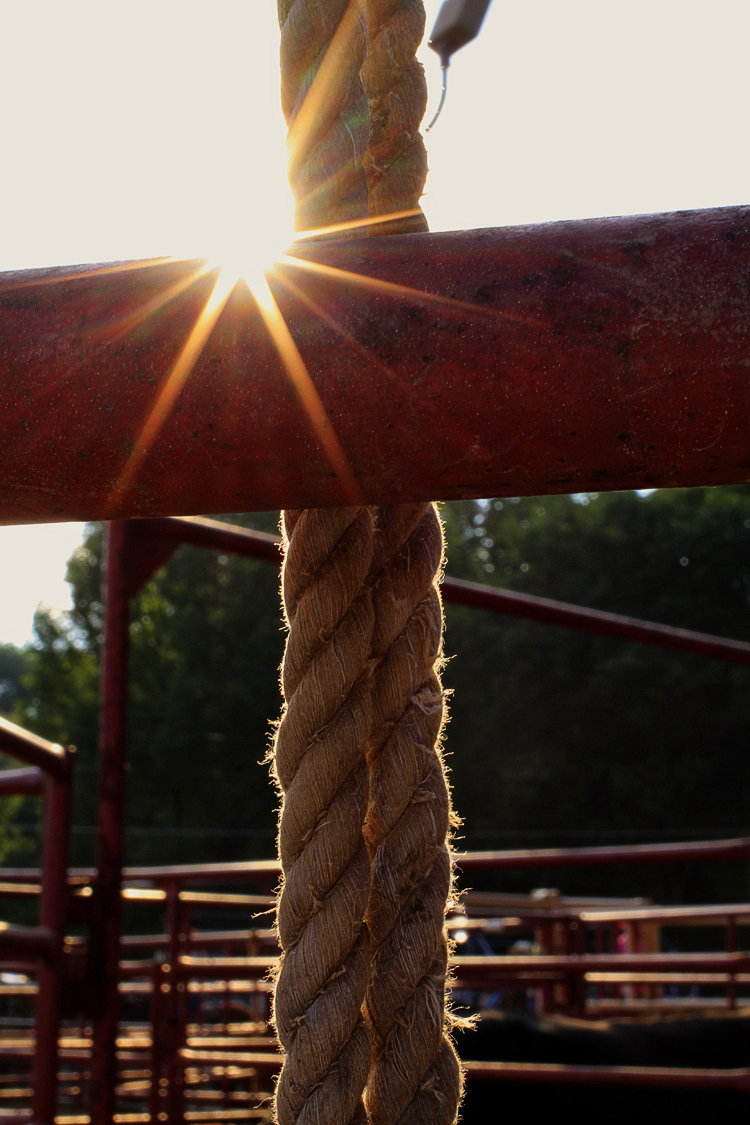
© Joe DiMaggio, no strobe
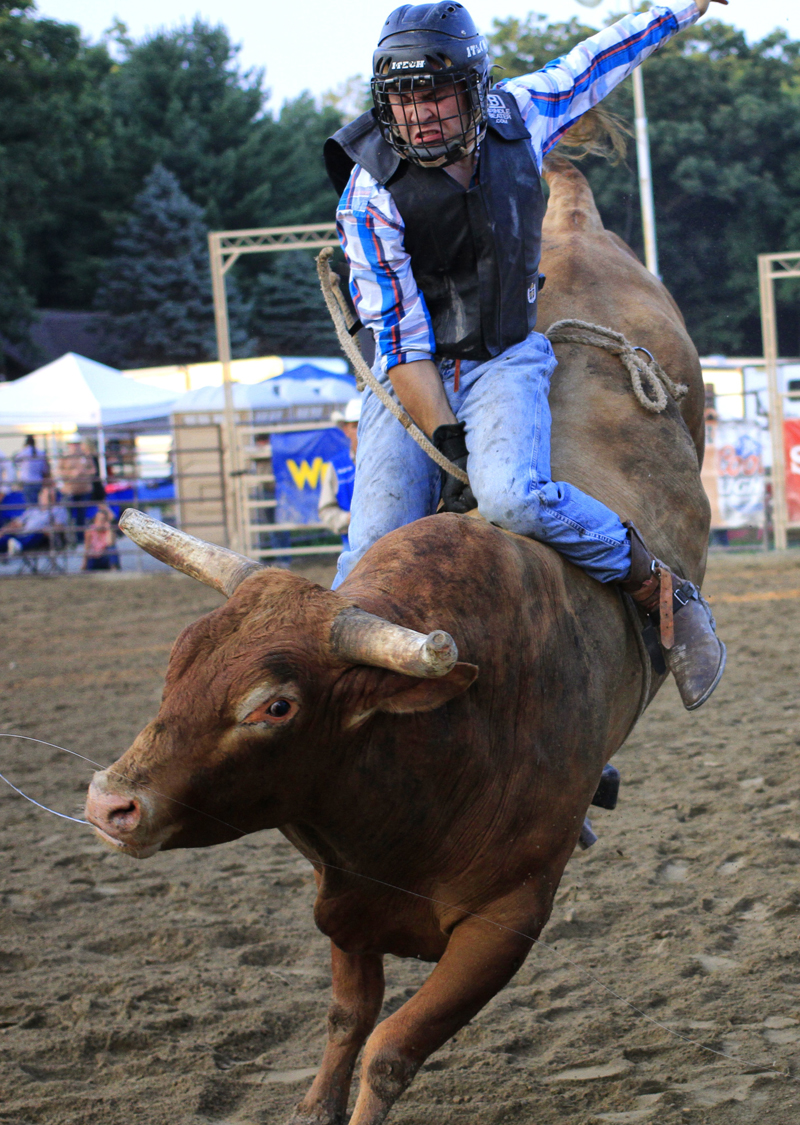
© Joe DiMaggio

I Invented the GoPro— NOT

© Joe DiMaggio

One of the greatest assignments I had an opportunity to do was a three-week assignment for Sports Illustrated on three brothers, the Whittington brothers, who inherited nine hundred million dollars. They had an affinity for cars, planes, and all things exciting.  Their 1979 Le Mans entrance won first in their class. A small part of my assignment was to have the three cars together at speed, so I ordered a Mitchell mount from California, mounted a Nikon f2 with a motor with a 15mm lens, and a remote cord into the compartment where I sat on four roll bars. I explained that we only needed to go 40 to 50 miles an hour. Unfortunately, race cars like to grip at much higher speeds. We did one pass at about 100 miles an hour, I changed film, and on the second pass, I could feel the remote button and my camera was out of film. I believe my quote was “we can go back to the pits, I’m done”. I will never ever use those words again. Bill Whittington kicked in the turbo and we went from 100 to 160 in what seemed like a millisecond, until the rear end broke loose (please keep in mind, he had on his Nomex, his balaclava, his gloves, his helmet, and all of his racing belts. I had beech nut gum and a death grip on the roll cage). He took the emergency road, locked up all the brakes, came to a full stop, popped out of the automobile and I was still frozen. Paul Newman looked over and said to me “You must be out of your mind to get in a car with that wild man”. Once again, Paul was right.

As everyone knows, I was brought into the digital world kicking and screaming. Now that I’m working on my memoirs, I realize what  I did with this series cost several thousand dollars and someone could have gotten hurt (namely me). In the world of digital, using two GoPros, one on the front and one on the back of the car would’ve been safer. I don’t have to be in the car, so if they would like to do 180, so be it. The overall cost would be less than $600 with a safety wire. God bless digital.

Shot at 1/15th of a second on Kodachrome 25 at f11.

© Joe DiMaggio

© Joe DiMaggio
Paul Newman with Don and Bill Whittington

Not My First Rodeo

To All The Ships At Sea

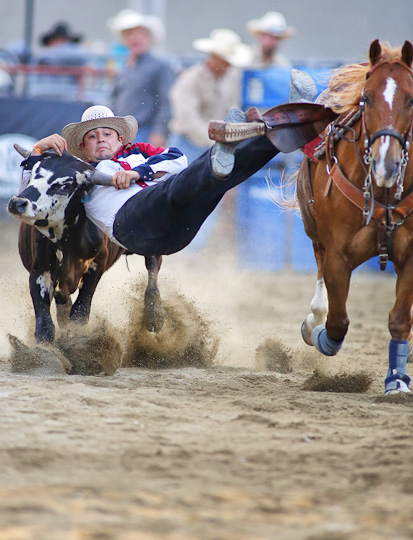
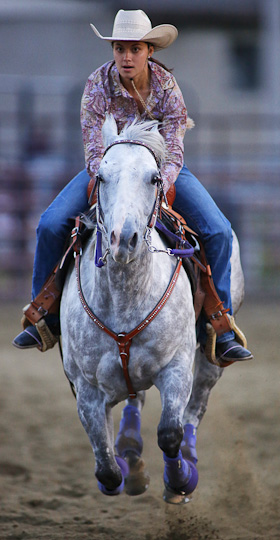
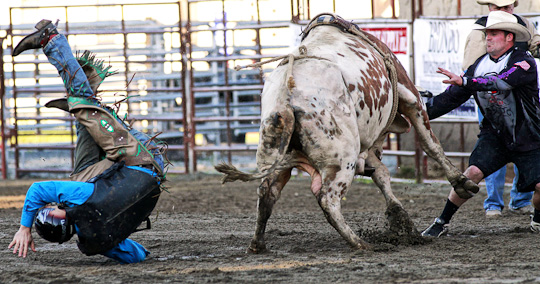
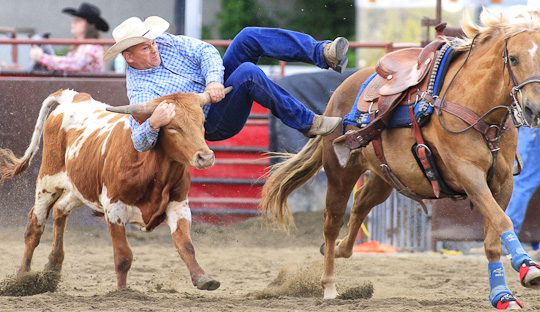
One of the great advantages of being a photographer is travel. I’ve been blessed because over my career I’ve been around the world twice and am now working on the third time. Many of my assignments revolved around sports and action. With all the assignments and travel, I had never photographed a rodeo until last week.It was my first. While shooting, an official came over and was kind enough to give me insight on who, what, and where the action would be taking place and for how long. I looked at him and said you do understand this is not my first rodeo and then realized what I had said and immediately corrected myself. Utilizing this cowboy’s thirty years of doing rodeo helped me make a better photograph with less mistakes.  This is what I call important pre-production. I make it my business to  seek out the elder of the village whether it’s in Botswana, Palermo or Utah. Do your research and seek out whatever help you can get to make your work better. Keeping your mind open to learn and trying knew things is important and it’s what makes the world go round.  The DiMaggio/Kalish Learning Center will be doing two professional rodeo workshops this year and they will be awesome.

Rodeo

©2012 Joe DiMaggio

All Photos ©2012 Joe DiMaggio

©’12 Joe DiMaggio

Image

©’12 Joe DiMaggio

Image

©’12 Joe DiMaggio

Image

©’12 Joe DiMaggio

99.9% Keep Shooting

© Joe DiMaggio All Rights Reserved

To All The Ships at Sea

Today is Tuesday. I’ve had three back to back days – 14 hours, 15 hours, 12 hours and today I’m doing a short segment on Ricky Boscorino for our Photo Retreat in July.  Late last night or early this morning (I genuinely forget) I stumbled across an essay I did on Mountain Biking.  One frame got my attention. When we pick up a camera, we all strive to make a new photo but 99% of the time it’s been made before.  So we try to put a new spin on it. Guess what?  99% of the time someone’s already done that.  It’s up to us though, to keep trying. That’s what we do.  It’s all Good.  Canon film camera 14mm lens 1/250 f/5.6 film Velvia 50

1/8000 of a second, What are you, crazy?

I vaguely remember when the fastest shutter speed in a camera was 1/500 of a second. Electronic flash would sync at a 1/60 of a second, and the press 25 synched at a 1/30 of a second. Then one day, up popped 1/500th of a second, 1/1000, 1/2000, 1/4000, and now 1/8000. If there’s one thing I do pretty well,  I’m like the Rock of Gibraltar when hand-holding a camera. In the day, I could hand hold a 500mm at a 1/500 of a second and make a reasonably sharp photograph. So why would you need 1/8000 of a second? On a recent trip to Mexico, I ran into a young man from Romania. He was the photographer for the resort we were staying in. He knew my work and asked me to look at his portfolio, which I did. Much to my pleasant surprise, his work was great. I mean damn great. Invariably, the subject of what camera he used and what lens came up. Not that I care about the brand or the focal length, but I was impressed when he told me he had one camera and one lens. Then I thought about it for a while. Why should that surprise me? I’d been telling my students one camera, one lens, 2 batteries, 2 cards, and kiss (keep it simple stupid.) This young man did it to perfection. He photographed his action sequences at 1/8000 of a second, and they were to die for. So I smiled, took a walk, moved my camera from ISO 200 to ISO 800, put it on 1/8000 of a second, and had a little bit of fun. I was surprised. There is a whole other world of high shutter speeds that I’ve never experienced. So for the next little while, I’d go from 1/8000 of a second to my normal shutter speed, which would be a quarter of a second. I guess I will never be too old to learn a valuable tip from a very young, and very good photographer. Thank you, Gabriel.