Bigger Is Better????


To all the ships at sea, I think it’s safe to say most Americans believe that bigger is better.  For that matter, maybe everybody on the planet believes bigger is better.  At last count, I believe I have three extremely large Gitzo

(Left Tall: Manfrotto 539Pro base and Manfrotto 503HDV head) (Left Under: Manfrotto 190CXPRO3 base and Manfrotto 701HDV head) (Right: Gitzo Studex tripod)

and Manfrotto tripods.  These are the BIG boys.  The older, larger Gitzo will hold over 200 lb’s.  Please do not ask how I know what for sure.  In addition to the repertoire, we have an extremely large Manfrotto carbon fiber which is awesome for large video work.  In the mid-sized tripods I’ve lost count, but we certainly have four to five.  Each with what I believe to be  special application.  Anybody who knows my works knows I like both Gitzo and Manfrotto standard monopods and more recently I’ve become a great fan of the Manfrotto video monopod (my DP and partners have been screaming for years “This is a good way to go” and of course, being the hard-headed person that I am, didnt pay much attention.  But now I do and it is a great tool).

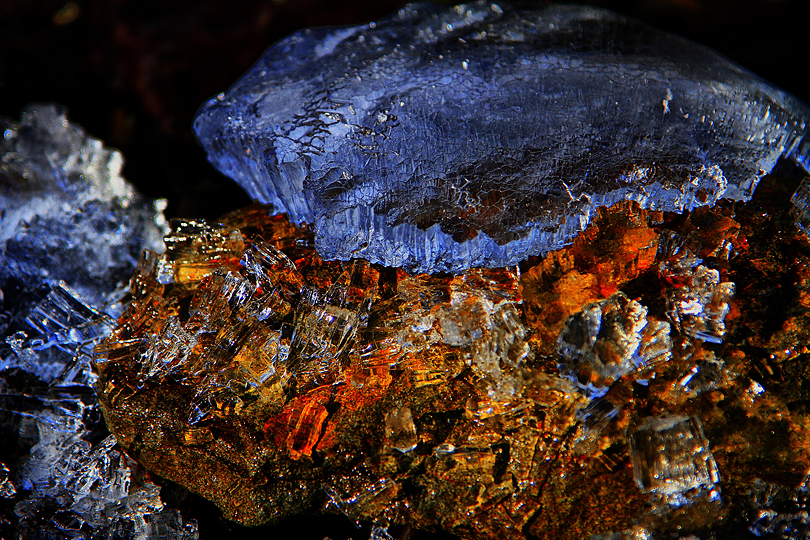
Now for the purpose of this particular blog.  At the end of my repertoire of tripods is a super-light super-small Manfrotto 190 Pro3 with a 701HD video head.  To be honest, I never paid it a whole lot of attention until I decided to do a 60 second piece for CBS Sunday Morning on ice, and a waterfall & damn covered in the stuff.  Because the areas are extremely small and difficult to get to I decided to break out the 190 Pro3 tripod.  Much to my surprise, it was unbelievably great.  I was able to sneak into little nooks and crannies and got the 1080I footage I was looking for.  My philosophy (and I believe I coined the phrase back in the day) is standardization and simplification are now going to standardize on this tripod for critical location work.  Bigger is NOT necessarily better.  And as we all know, it’s in the hands of the photographer or filmmaker.  Keep your mind open for new ideas, and keep your eye constantly looking for new imagery.  Believe it or not, it’s still there.

What the heck is that Sartek doing in the frame?!

Nik Software

Copyright 2011 Joe DiMaggio

Back in the day when I shot Leica, and used TriX and modified my carriers so you can print absolutely the whole negative with no cropping everything had to be done in camera.  I studied the zone system for years and effectively was unable to use it because I stopped shooting 4×5.  I one time watched Gene Smith, spend three hours making one 8×10.  On my best day in the darkroom my best print on a scale of 1-10 would be a 2.25. I did better with Cibachrome.  I was able to print Cibachrome and do a reasonable job.  When the world threw me a huge curve ball and digital photography became the answer to everything, I was caught with my proverbial down because I thought I was an elitist there was no way I would go digital.  I held out as long as I could and like a reformed alcoholic,  I scream the praises of digital today.  On or about the same time there was photoshop 1 or 2 Anybody who knows me knows I have the utmost respect for the Adobe programs but because of the way I shoot and the number of hours I work, I was not going to attempt to become proficient with photoshop. Maybe it’s a cop-out but I don’t think so.  I have interns and assistants that are extremely capable in the program.  I tell most of the students that 99% are only cleaned.  I very rarely attempt to make major changes in my images.  I go back to the old school.
Well, now I’m ready to move into the last part of my career as a fine art photographer, a filmmaker and director and Nik comes along and makes me crazy. I finally got the programs installed and decided to play with one digital scan.  That was at 8:30 in the evening. By 3:30 in the morning I had tested all of the software and was starting to bleed from my eyes. While bleeding I had a  huge smile smile on my face.  I was like 14 all over again – my first day in a darkroom. These programs are absolutely awesome. They are simple, straight forward and easy to use and even an idiot like me can make them work.  I don’t impress easy but I’m impressed.
Thanks
Joe DiMaggio
All Photos ©2011 Joe DiMaggio All Rights Reserved

Copyright Joe DiMaggio

Copyright Joe DiMaggio

Old School / New School

Without fail, during the teaching process, one of the obvious questions is: “How much Photoshop work do I do?”.  It may not be a stretch to say that some photographers may tend to exaggerate slightly.  It could be fair to say that in my past life, I may have been just like that person.  Lets get back on track.  I do extremely minimal amount of Photoshop.  Why you ask?  Because I’m not very good at it.  Why you ask?  Probably because I do not apply myself and I have a full day of photography, film making, and editing.  Id like to leave Photoshop to the experts.  Over the years, I’ve been blessed with several great assistants who are able to do absolute magic with the tools in Photoshop.  Scott Melanson is one of them, a graduate of CIA (Cleveland Institute of Art).  Enya Mommsen, also an absolute wizard.  Our newest assistant, Matt Tidridge has proven to be not only equal to the task, but in some ways, superior.  We had a friend come in who had a 1908 photograph of his wife’s mother as a child and wanted to rebuild the image.  I particularly thought of old-school in actually trying to restore the original print.  Not happening!  I pieced it together and shot the raw image, handed the file to Matt and he did his magic, which in my opinion is absolutely gorgeous.  So I take off my beret to Matt, who can generate an original piece of art from a tattered, 100+ year old print.  Knowing the tools, and how to use them, is a good thing.

Bill Eppridge in a Class by Himself

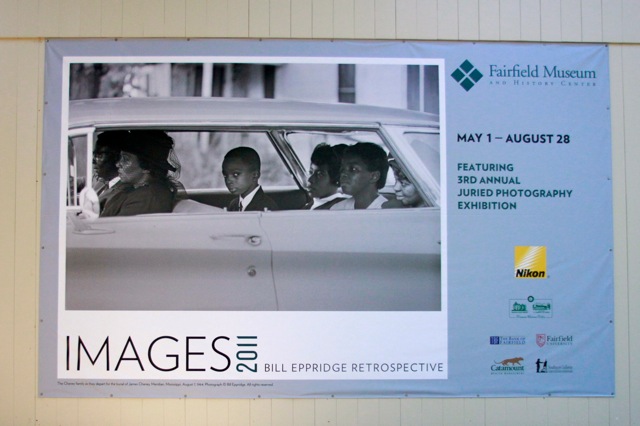
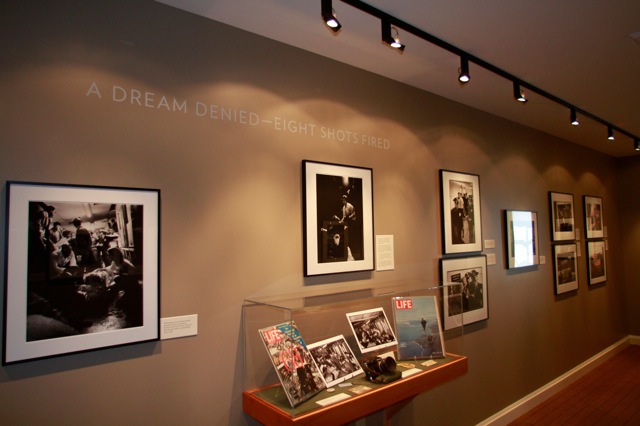
In my career I have been blessed with a few fortunate lucky right place, right time relationships. The first and foremost was attending the University of Missouri school of Journalism Workshop.  It really doesn’t get better than that. The second would be assisting W. Eugene Smith who taught me more about communications then anyone. Actually, he taught me more about many things but for the purpose of this we won’t go there. When asked to deliver a keynote speech at the NPPA, one of the people I thanked was Bill Eppridge. I would love to tell you that I know Bill well but as the truth be known, that’s just is not so. But here’s what I do know. Bill Eppridge has very few peers. He stands alone with his great talent.  He also has another quality that generally photographers don’t have. He’s an extremely humble about what he’s accomplished over the last few decades and he’s still a viable force to be dealt with. Bill invited me to his retrospective at the Fairfield Museum. Unfortunately, I was unable to attend. This past Sunday I had a little time off and decided to go to Fairfield, Connecticut to see the show.  I thought I knew exactly what I was going to see. Boy, was I wrong. I had no idea the depth and scope of his work. Like many other photographers, we know about the positive RFK Photos, but the retrospective truly showed what an amazingly great talent he is. This is one of the few times I wish I was a great writer because there aren’t enough adjectives to express what an important body of work he has. Photographer Alfred Eisenstadt, once told me, he had maybe only a dozen fine photographs.  When I had the audacity to tell him, “no you have thousands of great photographs,” he smiled, clicked his heels and said, “one day you will understand.”
Thanks Bill for continuing to teach me the importance and power of a great still image.

A World Without Kodak

Most photographers would disagree with almost everything: camera brands, focal length of lenses, the school of 8×10 to 35mm, and back again.  Color, black and white, c-print, r-print, die transfer, to light or not to light, in studio or out.  Lets face it, photographers don’t agree on a whole lot of things.  But I would guess, and I could be wrong, we were all weaned on Kodak film and the Kodak brand.  As a young photographer coming up I remember calling it the “Great Yellow Father”.  In my career, I’ve done several adds for Kodak, and an award winning short-film.  The idea that one day I will get up and Kodak will not be there is absolutely frightening.  My first camera, like many of my piers, was a Kodak Brownie.

“Kodak was once such a pervasive part of our lives that the “Kodak moment,” defined as a personal event that demanded to be recorded for posterity, entered our lexicon.

Now when even the most private Kodak moment seems to unfold before the digital gaze of a hundred iPhones, it looks as though Kodak’s moment has passed. The circle of life in business is a natural phenomenon, the lesson of which shouldn’t be overlooked by companies that seem to have cemented themselves into permanent spots at the top of the world today — including Apple, Google and Facebook. The lesson is: Nothing lasts forever.”
-Michael Hiltzik 2011