No Duct Tape or Crazy Glue!

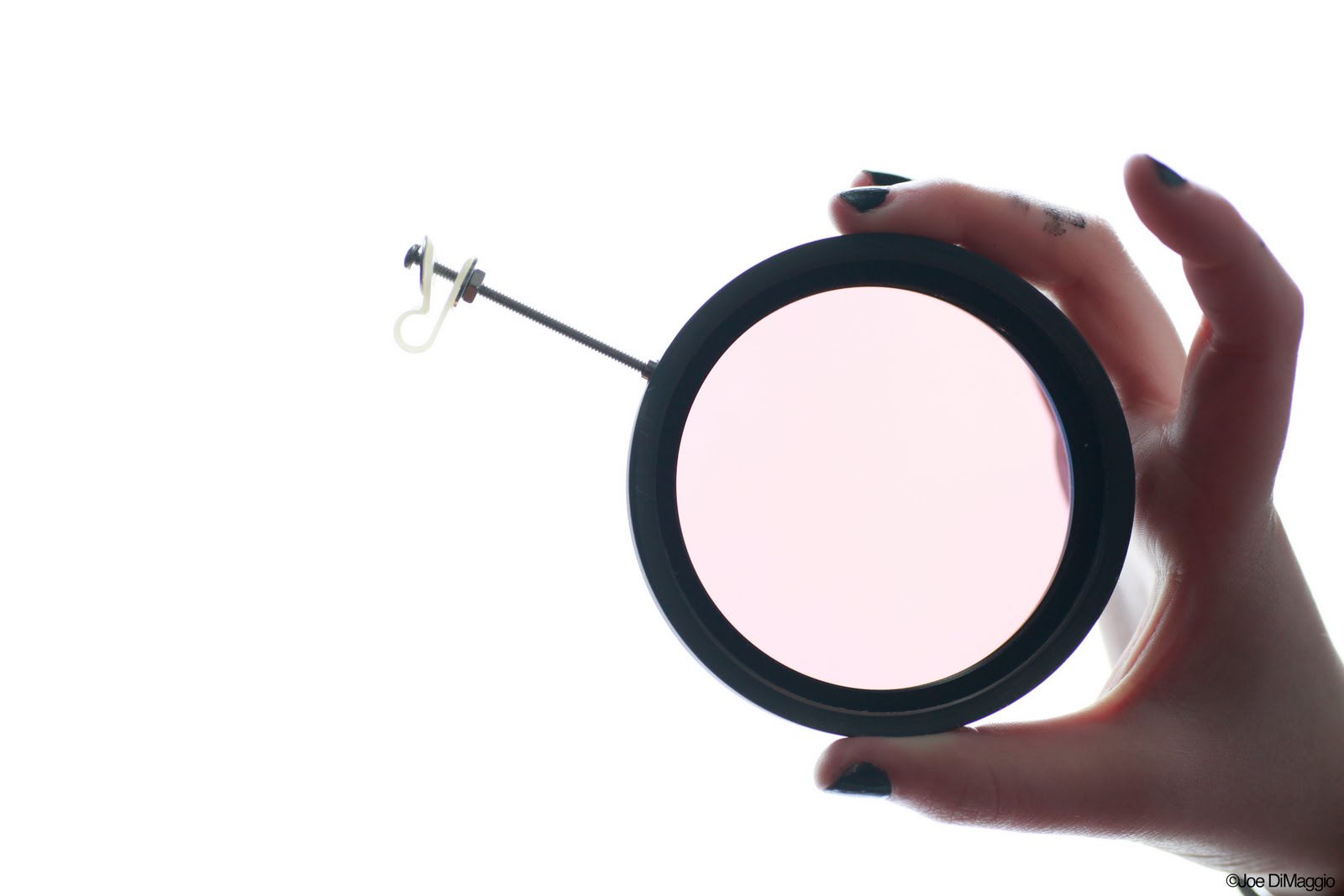
About a month ago, I put together a focusing ring that would allow me to turn a Singh-Ray Vari-ND and the Blue-N-Gold to change the value of light and color, without touching the filter or the camera. I used some of my favorite tools, duct tape and crazy glue.  
In a casual conversation with Carl Saieva from Sartek Industries Inc., – a world class designer and engineer. He said to send him a picture and he’d see what he could do. Well, this is what he did. He machined the parts. They’re super slick, smooth, easy to assemble, and did I mention that they work really well? This is the difference between a consumate professional and a hack. My intentions are good and sometimes the end result actually works, but most of the time it looks like shit. Thank God for great friends!

Tripods When You Need Them You Love Them

Ralph Morse behind camera with Ron Thompson looking on © Joe DiMaggio
A few days ago, I did a blog on tripods. On April 30, my blog was “Tripods: Love them or Hate them”. I started to think about it a little more.  I looked over in the corner of the studio, saw that old Gitzo, and started to run the numbers. That tripod is 37 years old. It doesn’t look new, but it’s always worked perfectly. Pretty impressive. I looked around for a few photos and came up with a photo of the great LIFE magazine photographer Ralph Morse, an amazingly great Nikon tech-rep and good friend of mine Ron Thompson, and a very fine photographer by the name of Al Satterwhite. Ralph is alive and well and lives in Florida,  Ron sadly, went to the great dark room in the sky about 15 years ago. This photo was taken in July of 1975 at the launch of Apollo-Soyuz. For the record, I take this big bad boy out today when I want to mount 2 or 3 cameras at a time and it’s still viable. But please keep in mind I adore my new Manfrotto’s. They’re super light, easy to pack, and work very well with the new DSLRs. Talking about that, imagine if you had a DSLR and was able to shoot HD video in July of 1975! How cool would that be? Ralph was kind enough to take a young photographer by the name of DiMaggio and teach him the ins and outs of how to photograph rocket launches. He came from the old school, and while I’m at it,  he went to DeWitt Clinton High School, which coincidentally was the same school my dad went to! Sometimes it’s just a small world. 

"Be as beneficent as the sun or the sea, but if your rights as a rational being are trenched on, die on the first inch of your territory." ~Ralph Waldo Emerson


Earlier this week, APA issued a statement responding to Getty Images’ proposed changes to its standard contributor agreements.  The response to our statement was overwhelming and, as expected, our members uniformly agreed that Getty Images’ proposed changes were unacceptable.  

Through our counsel, Nelson & McCulloch LLP, APA contacted Getty Images to make clear our position and to request that Getty Images stay or extend its self-imposed deadline for forcing contributors to sign these agreements.  We explained to Getty Images that APA strongly disapproved of Getty Images’ efforts to leverage its market dominance to force contributors to agree to these changes under duress. 

We also advised Getty Images that we were concerned that Getty Images may be misleading contributors into believing that their failing or refusing to sign these new agreements will result in the immediate termination of their prior agreements. 
We requested that Getty Images extend its self-imposed deadline for signing these new agreements, and make clear to all contributors that their decision not to sign a new agreement will not result in the automatic termination of their prior agreement and their imagery will not be taken off-line.  APA’s request was intended to allow a proper dialogue regarding the serious concerns that contributors have expressed regarding these changes.

Despite our efforts, Getty Images refused to respond to our inquiry and appears intent on maintaining this baseless, self-imposed deadline.  APA, therefore, must recommend that our members decline Getty Images’ invitation to agree to these unacceptable changes.

While we recognize that this is an extremely difficult situation for many contributors given Getty Images’ dominant position in the stock photography market, APA firmly believes that these changes are unacceptable and that the “solutions” that Getty Images has offered are entirely inadequate and fail to resolve even the most basic concerns.  
In fact, the various “solutions” offered by Getty Images in the contributors’ forum demonstrate that the fundamental problem with Getty Images’ proposed changes are that it presumes that all images should be licensed under the RF model and makes the photographer justify why particular images warrant special treatment. 
APA fundamentally rejects this view of stock photography licensing. 

As the creator and owner of the intellectual property, the photographer has the inherent right to determine how an image is to be licensed, including whether an image should be maintained as an RM or RF image.  Getty Images’ effort to leverage its position in the industry to undermine that fundamental right and force its contributors to relinquish control over the manner in which their creative works are licensed is completely improper.  

Perhaps more importantly, APA also is seriously concerned about the manner in which Getty Images has attempted to force these radical changes on its contributors.  Adopting baseless, self-imposed deadlines and threatening to terminate contributors who do not accept changes to their existing contracts is not acceptable.  As a community, we cannot continue to ignore Getty Images’ efforts to intimidate and strong-arm contributors, and we must not allow Getty Images to force contributors into signing these new contracts under duress.  

While each of our members ultimately must decide for itself whether to accept the new contracts being imposed by Getty Images, APA recommends that, as a community, we resist and reject the direction in which Getty Images is trying to take this industry.  Given Getty Images’ overwhelming stature in the licensing industry, it is clear that we can be heard only if we stand together and stand up for what we believe to be right and just.  

While we cannot be certain as to how Getty Images will respond, we must make clear to Getty Images that its contributors do not agree with Getty Images’ vision of the future of this industry, and we will not tolerate its efforts to coerce and intimidate its contributors.  If we send a clear message, we are hopeful that Getty Images will relent and engage in a more meaningful dialogue regarding this crucial issue.

As for those contributors who already have signed the contracts or decide to sign the contracts before tomorrow’s absurd deadline, we recognize the tremendous pressure you feel to maintain a relationship with Getty Images.  APA will make every effort to address this concern with Getty Images and advocate for a solution on your behalf.  

Again, we thank our members for their support and want to assure you that APA intends to stand up for the rights and interests of our members and all professional photographers.  If we stand together, we are confident that our voice will be heard.

Deux Presidents

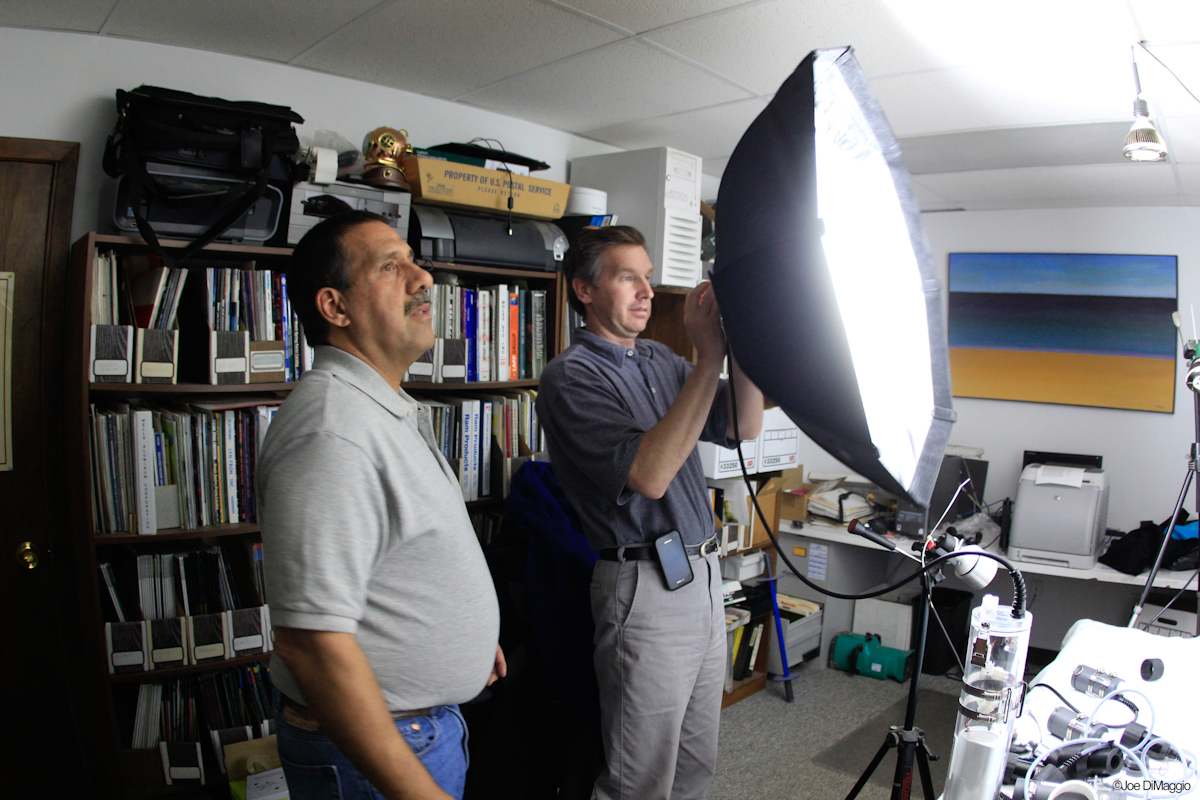
Peter Poremba, a brilliant businessman and President of Dynalite, happens to be a good friend. In my opinion, Dynalite is the finest electronic flash manufacturer with the best value for your money and they make extremely durable units. By the way, Peter has a gorgeous wife Connie and a beautiful daughter Olivia – how great is that? Another good friend, Carl Saieva, is an amazing designer and engineer. Carl happens to be a master dive instructor who specializes in cave diving. Carl makes the finest, brightest, and best underwater lights money can buy. Carl also has a beautiful wife and three beautiful children – one set of twins. I’ve been trying to get both of them together for about 10 years, and it finally happened this week. My guess & hope is that you may be seeing a collaboration between the two of them. It could make the photographic/video family, especially the new DSLR shooters, and maybe some Hollywood shooters ecstatic. Who knows I think the combination of these two collaborating could really make some very fine products. 

Author and Friend – Jess E. Weiss

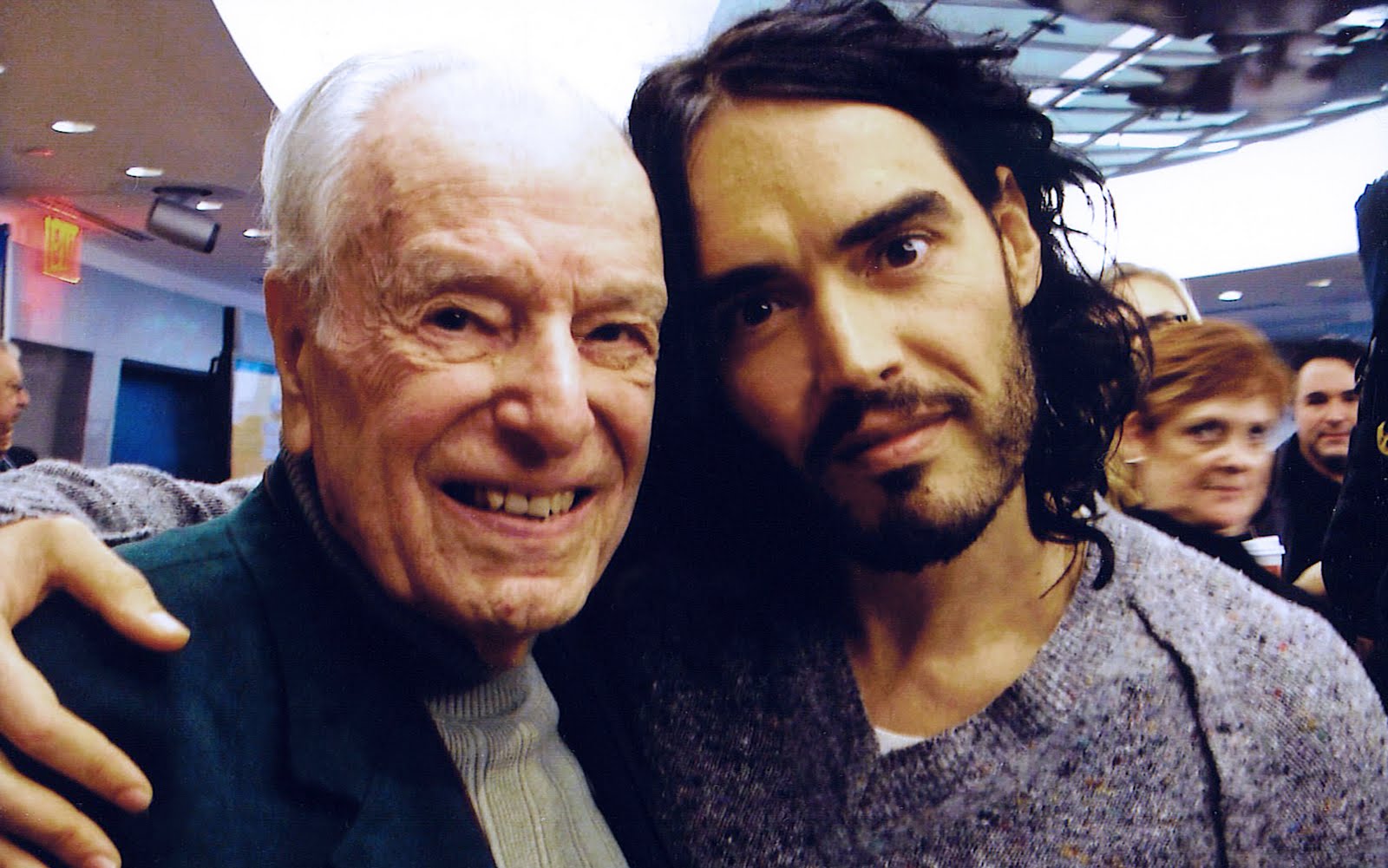
Jess Weiss with Russell Brand at Operation Warrior Wellness

I guess no one would be surprised to say you only have one mother and father but you can have numerous heroes and mentors.  I’ve had a few over the years, including John F. Kennedy and Martin Luther Kind Jr.. The question for me is how many true heroes have you met?  Author, Jess Weiss is a combination of my brother, father, Rabbi, Priest, and close friend.  He is also a true hero.  When my dad and mom passed away I went to Jess, when my brother passed away I went to Jess, and lastly when my son passed away who did I go to – Jess of course. To say jess, is a visionary or a prophet is an understatement. Jess is a man with so much love, warmth, and passion in his heart and soul and he shares it with everybody on a no charge basis.  His latest book “Warrior to Spiritual Warrior: The Soldier’s Journey” is an absolute must read for everyone. 


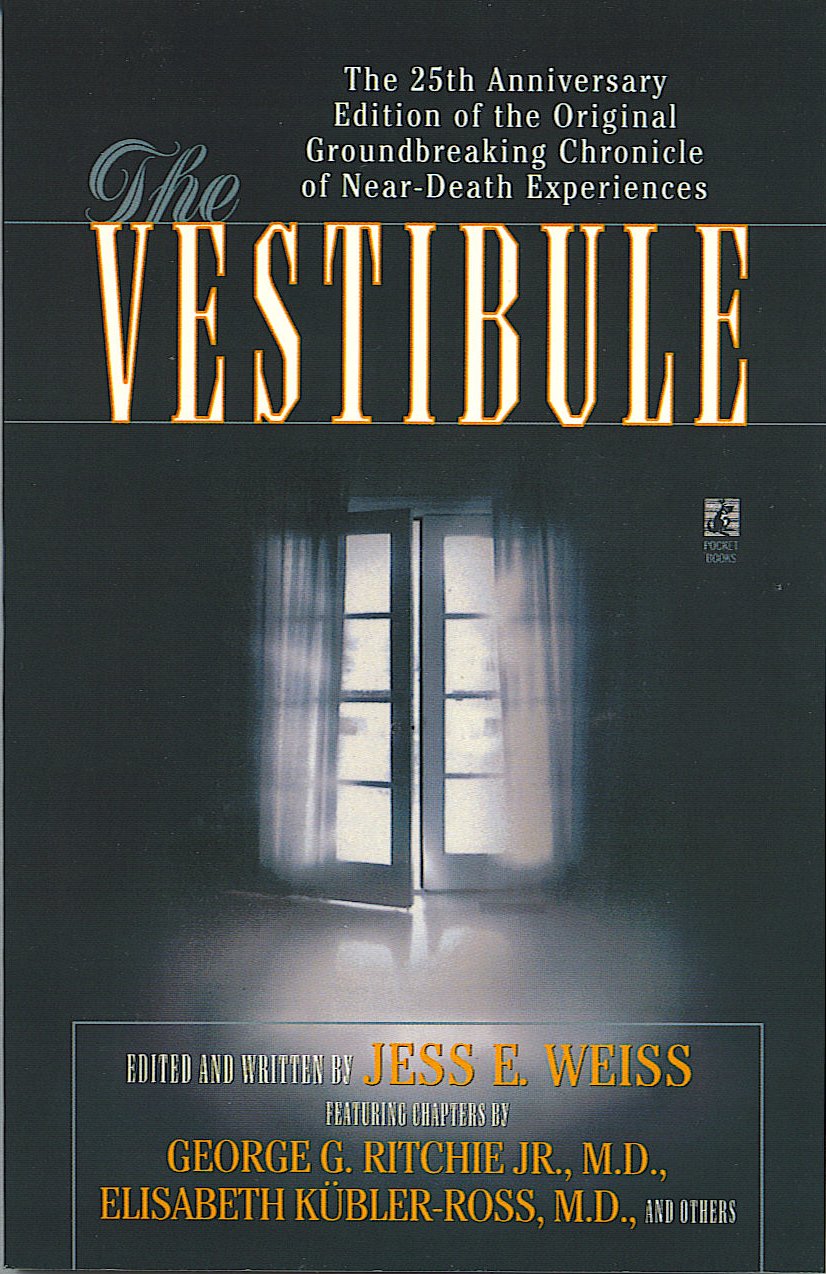
The 25th Anniversary Edition of the Original   Groundbreaking Chronicle of Near-Death Experiences.                           
              THE VESTIBULE                                     
              Jess E. Weiss
In 1972, three years before Raymond Moody’s Life after Life and twenty years before Betty J. Eadie’s Embraced by the Light, Jess E. Weiss edited and wrote the groundbreaking book that answered the age-old question, “What happens when we die?” Now Pocket Books will publish the 25th Anniversary Edition of Weiss’s THE VESTIBULE (a Pocket Books Trade Paperback).
     THE VESTIBULE was one of the first books to broach the subject of life after death and record experiences of those who died and then returned. It is a collection of remarkable stories told by men and women who were pronounced dead, only to return to their bodies and resume living.  Their reports of journeying to death are so vivid, so full of joy and peace, and so startlingly alike that they give overwhelming evidence for the survival of the spirit after life. “The purpose and motive of THE VESTIBULE is to establish with more certainty that there is an afterlife,” wrote Jess Weiss, “thereby alleviating fully or to a degree the sting of death.”
      Since publication, THE VESTIBULE has been used extensively in hospices for the terminally ill for its comforting and healing message. Dr. Elisabeth Kubler-Ross, The prominent physician and bestselling author of On Death and Dying, used Weiss’s book in her workshops to reassure dying patients and their families, and thousands of people around the world found solace in the accounts in Weiss’s book. “I cannot express on paper the feelings I felt while reading your book,” wrote one grateful reader. “Your book showed me that death is not frightening for the ill person. He welcomes it, after all that he has been through. For me, the subject of death no longer makes me tremble.”
      Forever timely, THE VESTIBULE has been, is, and will continue to be a Spiritual guidepost for every person, leading to a greater understanding of life and Death … and the afterlife.
POCKET BOOKS-A division of Simon & Schuster Inc-1972, 1997
Liz Hartman, Director of Publicity, 


Filters: Love them or Hate them

It’s pretty obvious that everything in my blog is my opinion, and my opinion is not necessarily fact. I may think I’m right, but if another photographer has a totally different way of getting to the same place, then I  take my Beret off to them

So, here it goes – back in the day, when we had 52, 62, 72, 82, and 95mm threads, and shot 3 different types of black and white and color film, we had lots of filters. At the end of that era, my attitude was that any additional air glass surface that was put in-between the lens and the subject it could have a tendency of degrading the image. So, I consider less is more. Or, minimalistic filtration. I believed it, taught it, and damn well thought I was right.  I never really believed a UV filter should be used to protect the lens. Today, many people would say that with Photoshop and high-end digital photography, you don’t need filters. I personally try to do almost everything in camera, with a minimal amount of Photoshop. I may have come to that decision because I’m not as proficient as others with Photoshop. Or, it just could be that’s the way I was brought up in photography. When it comes to filters, I only use Singh-Ray filters- their high-intensity, Gold-N-Blue, the Vari-ND, and I am looking forward to the new Vari-ND. On a previous blog, I made a rig to use the Variable Polarizer, the Vari-ND for video. My good friend Carl Saiver, of Sartek Industries,  looked at what I made and said something to the effect of, “you have to be ___  ___ kidding!” He removed it from my camera and said that he’d have something for me in a week.  A week later what appeared was a simple, elegant design for variable focusing and changes in filtration from either the left or right side with no noise or movement, and it’s super smooth. Just want to let you know about my friend Carl – he’s a genius! Carl’s a world-class engineer, designer, and underwater maven. I strongly recommended going to his website.  He makes some of the greatest lights in the world. Also, don’t forget to check out Singh-Ray’s filters you may be pleasantly surprised.   To all the ships at sea, I’m signing off.

http://www.sarind.com/

http://www.singh-ray.com/

Self-Timer: One of your Best Friends

Some of the little-known, inexpensive, non-descript, built-in accessories have been ignored for years. One of those would be the self-timer. Some of you may remember the ones that you had to crank. Then, there were ones that you had to load and press a button and you’d hear that buzzing sound. The beautiful thing about today’s self-timer is that you have 2 separate settings, one for 2 seconds and one for 10 seconds. It is invariably a great tool for close-up and macro, stationary landscapes, waterscapes, table-top and catalog work, etc. No matter how great your tripod is, no matter how steady you are, no matter how fast your shutter speed is, when you put your face, your nose and your hand on a camera, there’s going to be some movement. Compose, light your shot, step back, take a sip of red wine, and hit the self-timer. Okay, no red wine maybe Green tea. Okay, red wine and green tea.

Some Corporations Won’t be Happy Until They Destroy Us All

APA Responds to Getty Images’ Proposed Changes to Contributor Agreements

April 2011 – Getty Images recently announced that it intends to make a number of significant changes to its standard contributor agreements.  For instance, the new agreements will allow Getty Images to include all royalty free (RF) content in any subscription products and also will eliminate the ability of contributors to prevent their content from being licensed in multimedia products. 

Getty Images also has proposed changes that will allow it to move image content across license models by “removing the ability for contributors to opt out of images moving from RM to RF.”  For editorial contributors, Getty Images also intends to make changes that will enable it “to more easily modify content use across more and new license models, products, services and selling environments, including subscriptions, high-volume customer deals and new or emerging pricing, licensing and payment models.” 
According to Getty Images, these changes are intended to allow Getty Images to more freely use content in ways that were unforeseen previously in order to meet current and future customer needs.  

Following on the heels of its Premium Access subscription product—which has eroded significantly the licensing fees being achieved for rights managed (RM) content—these modifications clearly signal that Getty Images’ top priority is expanding its own market share by whatever means necessary, irrespective of the damage it causes to the rights and interests of contributing photographers and image partners.  

It is APA’s position that these changes are unnecessary and that it is inappropriate for Getty Images to continue to leverage its position in the industry to force contributors to relinquish control over which licensing model shall apply to their creative works.  Rights managed licensing has been in existence for decades and is the preferred method of licensing high-value content. 

Allowing Getty Images to place RM content into subscription products and move content between licensing models irrespective of the author’s wishes are major departures from industry norms, and they come at too significant of a price.  If Getty Images is permitted to move imagery from the RM to the RF paradigm without the consent of and without previously informing the contributor, it becomes almost impossible to license that imagery as RM ever again. 
Moreover, because Getty Images controls both the marketing of contributor content and the parameters for prioritizing its customers’ search results with very little accountability, there is a tremendous risk in also allowing Getty Images the authority to siphon RM imagery into the new and different models.  

The erosion of the RM model also is concerning because it makes it more difficult for copyright owners to track usage of their creative works and protect their copyrights.  Getty Images obviously realizes the importance of tracking third-party usage and monitoring copyrights because it does so vigorously for its wholly-owned content.

APA is disappointed that Getty Images fails to appreciate that these same concerns also are important to its contributors and image partners.  For the stock photography industry to flourish, major distributors like Getty Images must respect the fundamental tenets of the rights managed licensing model and they must cooperate with and assist photographers in protecting their copyrights rather than consistently deferring to their customers who are infringing copyrights.  

Because APA is very concerned by the changes being proposed by Getty Images, we have retained Nelson & McCulloch LLP, a New York-based law firm which focuses its practice on copyright law and litigation ( http://www.nelsonmcculloch.com), to help us develop a response to these changes and open a dialogue with Getty Images to address this issue. 

Nelson & McCulloch have handled a number of cases and matters involving Getty Images and have served as litigation and arbitration counsel for contributors and image partners in disputes with Getty Images relating to the licensing of Rights Managed imagery.  Nelson & McCulloch thus offers APA and our membership invaluable experience and expertise in addressing this particular issue.

Please send your concerns and individual situation comments on this subject to Nelson & McCulluch. They will use them to compile and frame dialog with Getty and for other stock issues in the future.

Dan Nelson – dnelson@nelsonmcculloch.com
Kevin McCulloch – kmcculloch@nelsonmcculloch.com


APA – NATIONAL
PO Box 725146 Atlanta, GA 31139
Phone: (800) 272-6264 ext. 12 e execdirector@apanational.com


My Dear Friend, 
When my friend Peter B Kapland sends me a e-mail 3 to 4 times a week underneath his signature he has a quote from Henri Cartier Bresson, “Giving up rights to your photos is like taking skin from your eyeballs.”

Rubber Bands or how I made Gone with the Wind

Most photographers spend their freshman years developing the basic fundamental skills necessary to make a reasonable photograph. The next sophomore and junior years, they’re developing a style, a presence. They’re honing their skills in composition and lighting. As they move into their master years, I think we found out the difference between something that looks good and something that looks great could be a 3-cent rubber band. At this point, I would love to take credit for coming up with this idea. Sorry, guys, not my idea. If I knew the gentleman or lady that came up with the idea, I would certainly credit them with it. You may know my good friend Lou Long, a great photographer. He spent half of his career in Europe. He is now based in Miami Beach. He showed me a little trick with the rubber band on the fluid head. Manfrotto. And the difference is night and day. Similar to the self-timer versus the manual exposure with a finger, this removes all the sound, huffing and puffing, and gives you an unbelievably smooth pan. So go buy some rubber bands, attach them to your fluid head, and make yourself “Gone with the Wind 2”. It’s all good.

May 1, 2011 Justice a Long Time In Coming

I lost 3,000 brothers and sisters on Sept 11,2001.  One was an extremely close friend the other a friend.  I’d like to thank all the men and women in the armed forces, CIA, Special Ops and the Navy Seals that put an end to a mass murderer.  When Osama Bin Laden attacked the World Trade Center he literally attacked all people from all countries not just Americans.

                                                © Joe DiMaggio