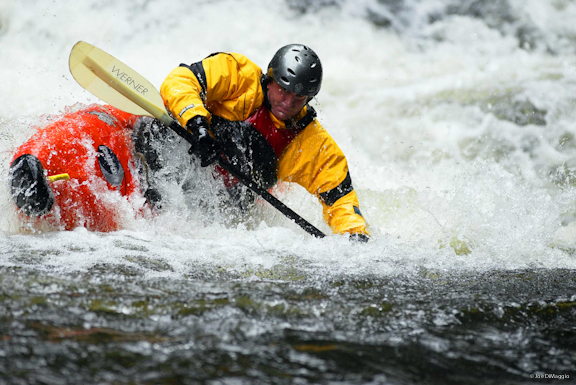
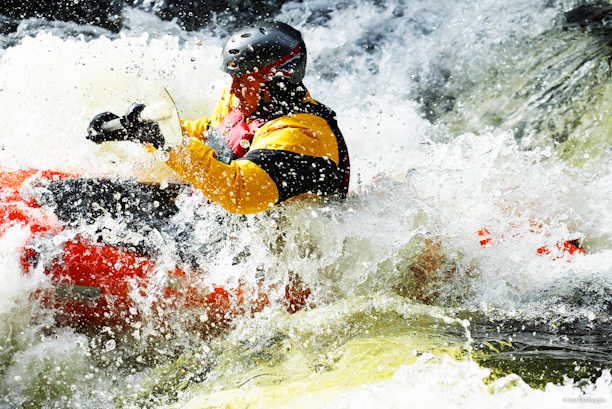
I was contracted by the Canadian Olympic Association to photograph basketball, boxing, soccer, track and field, and kayaking. I fell in love with kayaking and proceeded to kayak for the next 20 years and moved to ocean kayaking. One of the things that I used kayaking for was eye-hand coordination and remote photography. Will try to dig out some of the film- Yes, Alice, there was film in those days! I’ll see if I can show you a few examples. But, in the interim, every once and a while I like to take the rust off and go photograph kayaking. Here are a few frames. Hope you enjoy them. Shutter speed ranged between a 500 and 1000, ISO 200. 80 to 200 mm lens. Pick a number- f4.5.
Category Archives: Uncategorized
20 Years Ahead of the Curve
There is an old adage when all else fails tell the truth. It’s something I genuinely believe in. The new word today is “transparency” – tough to stay up with the brave new world! About 20 years ago I had a conversation with one of the most powerful women in the world of photography. She took a $50,000 corporation and turned it into the second largest agency in the world and sold it for upwards of thirty-million dollars. I said to Sally, I guess I’m 20 years behind the time and she said that it was the exact opposite and that I was way ahead of my time. It was a wonderful compliment but I’m not sure if I actually believed it. When the technology came for the motor drives, I did not embrace it. The next big leap was auto programming and I did not embrace this. Shortly afterwards, autofocusing came out and I did an interview and was quoted as saying my clients want me to focus the camera – I’m not a grandfather yet! Need I say, I did not embrace that technology either? I’ve been making photographs on film for 5 decades. When digital came out I did not embrace it. Is it possible that one man could be wrong about so many things? I’m afraid the answer is yes.
Of course, in 2011, I utilize all this new technology. There is no doubt that when you use these tools properly you’ll be rewarded. Wiebetech has given me an opportunity to not be 20 years behind the times but actually to be 20 years ahead of the time. The combination of the big three – The Double Barreled Derringer (ToughTech Duo), The Little Gun (RTX220-QR) and the Big Gun (RTX800-IR) give me a tremendous advantage in filing, storing and retrieving all of my photographs and films. It is definitively the best technology today and to be honest, probably for a long time to come. Wiebetech has allowed me for the first time in a long time, to be ahead of the curve. I strongly recommend that every advanced photographer and filmmaker incorporates this technology to protect their life’s work. We all travel different roads and have different motivations and needs but with your solutions we will have choices. Thanks so much. Keep up the great work.
Joe DiMaggio
Adorama Inaugural Street Fair
Joe DiMaggio
10 Greatest Indy 500 Moments
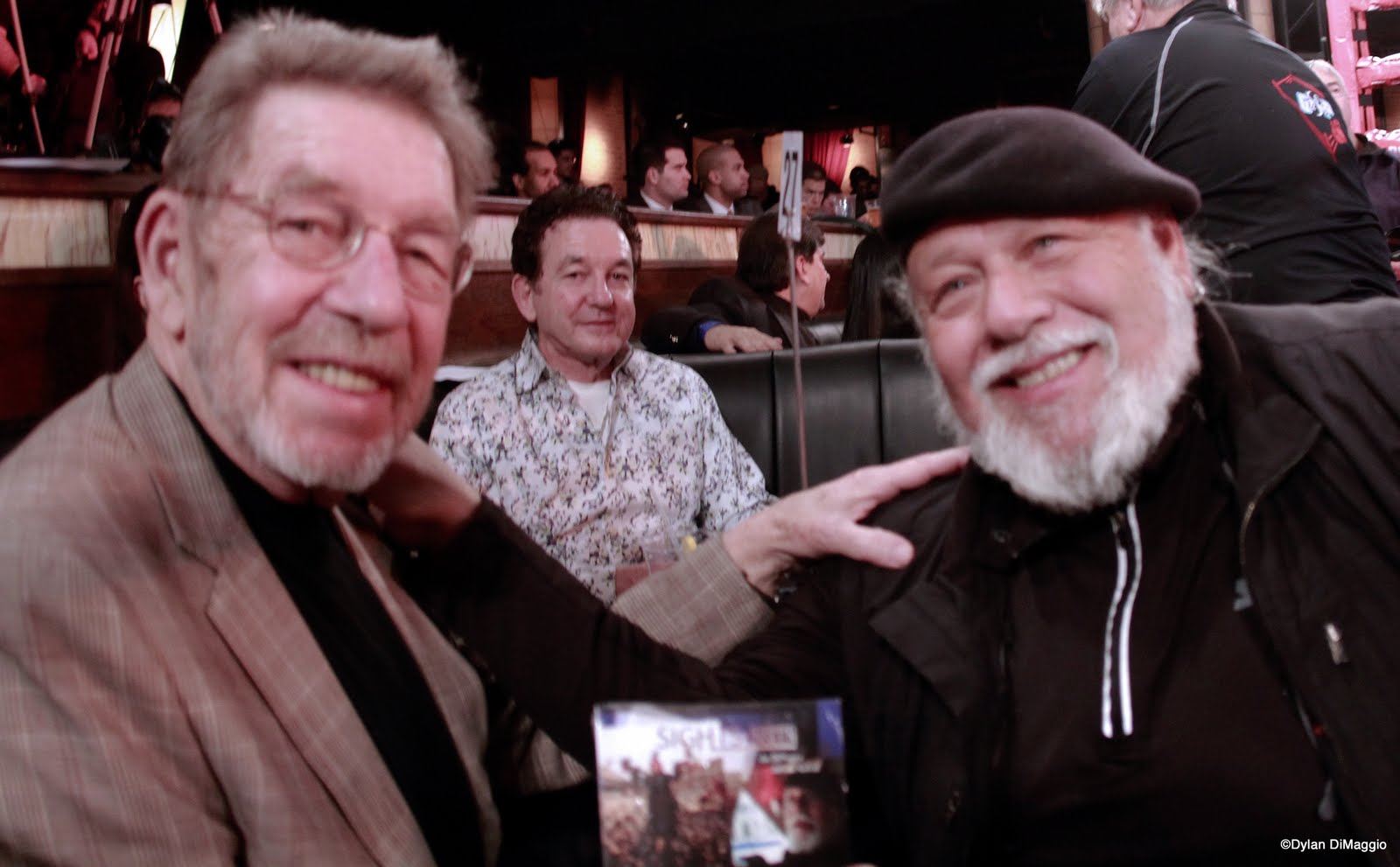
Tabloid City: a New Crime Novel by Pete Hamill
“Hamill (North River) forays into Dominic Dunne society crime territory before veering uncomfortably into a far-fetched terrorist plot. Just as the last ever edition of the New York World is getting put to bed, veteran editor Sam Briscoe stops the presses for a sensational murder: socialite Cynthia Harding and her personal secretary are found stabbed to death in Harding’s Manhattan town house. The story unfolds in time-stamped, you-are-there bursts that follow a large cast, including several journalists; Cynthia’s adopted daughter; a disgraced Madoff-like financier; a media blogger; the murdered secretary’s husband, a police officer assigned to a counterterrorism task force, as well as their son, a convert to radical Islam; and best of all by the weary and worldly Briscoe himself.Milford Theatre
Photo ©JoAnne Kalish
The first time I saw the Milford theater, I thought to myself, “wow, what a great place for summer stock, music, poetry readings, an author talking about their new book, or a place to show other new avant garde short films!” That was 15 years ago. Now that Jerry Beaver has purchased the Milford theater, all of these things are going to come to pass. This is probably one of the most exciting things that has happened in our little town in a long time and I’m looking forward to it. Thanks, Jerry! Can’t wait for the official opening.
Character Project
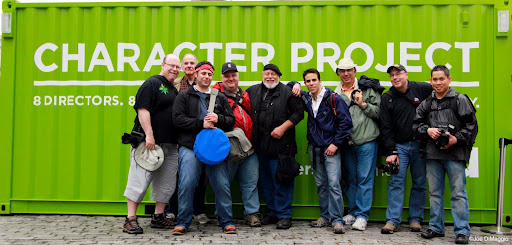
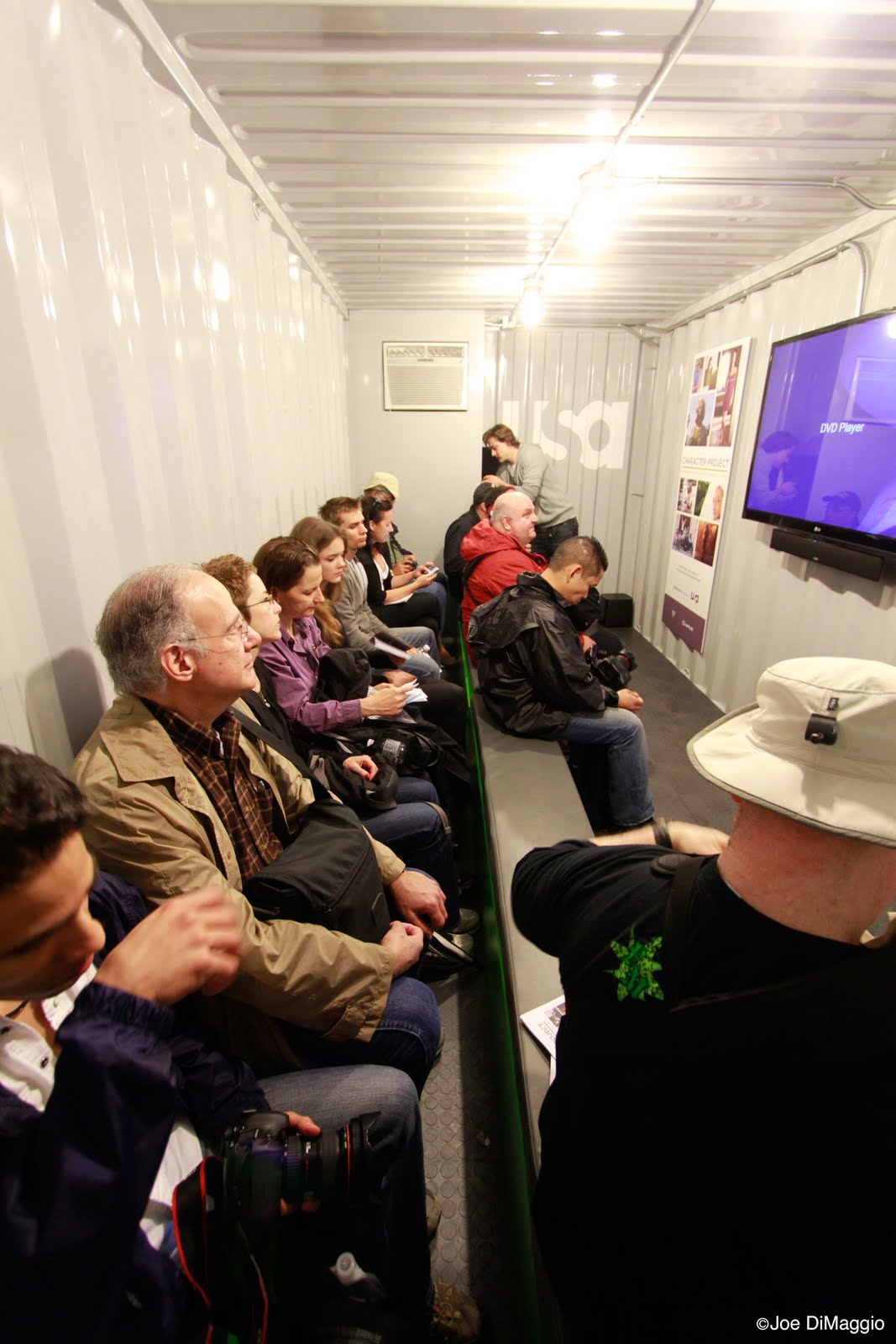
Sunday I had the pleasure of leading a photo workshop in the West Village. Before we started, I decided to take the class to the Character Project, presented by Sir Ridley Scott and Tony Scott, to see 2 short films. From the reaction of the class, they thought it was a great idea and I was extremely happy that I had an opportunity to experience the short films “Fish” and “The Fickle”. “The Fickle” is a seamless 7 – 8 minute film, done in one shot. Drop-dead great! I take my beret off to the director, Bryan Poyser.
“Character Project is an ongoing artistic initiative committed to celebrating America’s characters – the interesting, dazzling, and distinctive people, from all walks of life, who make this country extraordinary.
No Duct Tape or Crazy Glue!
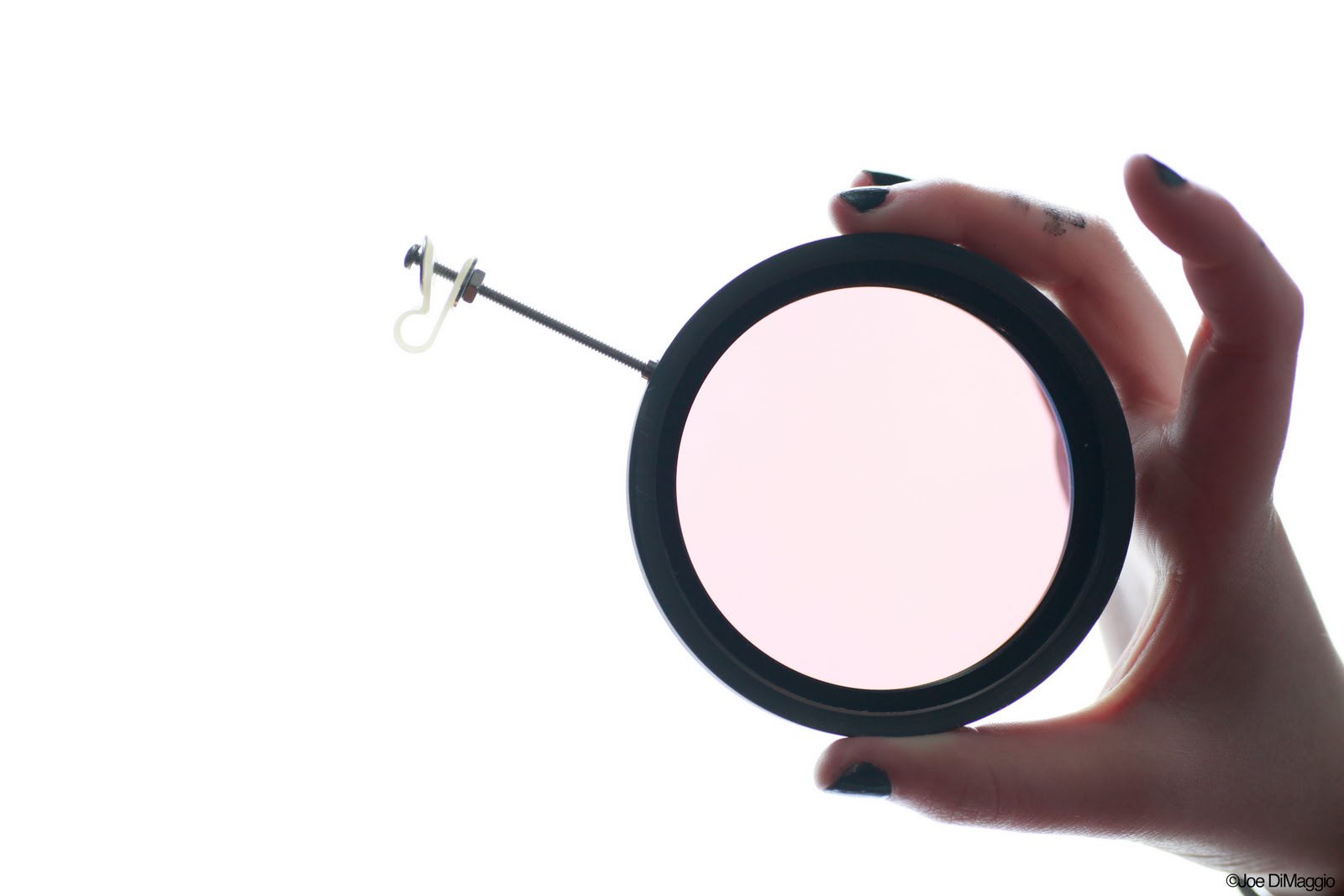
About a month ago, I put together a focusing ring that would allow me to turn a Singh-Ray Vari-ND and the Blue-N-Gold to change the value of light and color, without touching the filter or the camera. I used some of my favorite tools, duct tape and crazy glue. "Be as beneficent as the sun or the sea, but if your rights as a rational being are trenched on, die on the first inch of your territory." ~Ralph Waldo Emerson
Earlier this week, APA issued a statement responding to Getty Images’ proposed changes to its standard contributor agreements. The response to our statement was overwhelming and, as expected, our members uniformly agreed that Getty Images’ proposed changes were unacceptable.
Through our counsel, Nelson & McCulloch LLP, APA contacted Getty Images to make clear our position and to request that Getty Images stay or extend its self-imposed deadline for forcing contributors to sign these agreements. We explained to Getty Images that APA strongly disapproved of Getty Images’ efforts to leverage its market dominance to force contributors to agree to these changes under duress.
Despite our efforts, Getty Images refused to respond to our inquiry and appears intent on maintaining this baseless, self-imposed deadline. APA, therefore, must recommend that our members decline Getty Images’ invitation to agree to these unacceptable changes.
As the creator and owner of the intellectual property, the photographer has the inherent right to determine how an image is to be licensed, including whether an image should be maintained as an RM or RF image. Getty Images’ effort to leverage its position in the industry to undermine that fundamental right and force its contributors to relinquish control over the manner in which their creative works are licensed is completely improper.
Perhaps more importantly, APA also is seriously concerned about the manner in which Getty Images has attempted to force these radical changes on its contributors. Adopting baseless, self-imposed deadlines and threatening to terminate contributors who do not accept changes to their existing contracts is not acceptable. As a community, we cannot continue to ignore Getty Images’ efforts to intimidate and strong-arm contributors, and we must not allow Getty Images to force contributors into signing these new contracts under duress.
While each of our members ultimately must decide for itself whether to accept the new contracts being imposed by Getty Images, APA recommends that, as a community, we resist and reject the direction in which Getty Images is trying to take this industry. Given Getty Images’ overwhelming stature in the licensing industry, it is clear that we can be heard only if we stand together and stand up for what we believe to be right and just.
While we cannot be certain as to how Getty Images will respond, we must make clear to Getty Images that its contributors do not agree with Getty Images’ vision of the future of this industry, and we will not tolerate its efforts to coerce and intimidate its contributors. If we send a clear message, we are hopeful that Getty Images will relent and engage in a more meaningful dialogue regarding this crucial issue.
As for those contributors who already have signed the contracts or decide to sign the contracts before tomorrow’s absurd deadline, we recognize the tremendous pressure you feel to maintain a relationship with Getty Images. APA will make every effort to address this concern with Getty Images and advocate for a solution on your behalf.
Again, we thank our members for their support and want to assure you that APA intends to stand up for the rights and interests of our members and all professional photographers. If we stand together, we are confident that our voice will be heard.

Filters: Love them or Hate them
It’s pretty obvious that everything in my blog is my opinion, and my opinion is not necessarily fact. I may think I’m right, but if another photographer has a totally different way of getting to the same place, then I take my Beret off to them
So, here it goes – back in the day, when we had 52, 62, 72, 82, and 95mm threads, and shot 3 different types of black and white and color film, we had lots of filters. At the end of that era, my attitude was that any additional air glass surface that was put in-between the lens and the subject it could have a tendency of degrading the image. So, I consider less is more. Or, minimalistic filtration. I believed it, taught it, and damn well thought I was right. I never really believed a UV filter should be used to protect the lens. Today, many people would say that with Photoshop and high-end digital photography, you don’t need filters. I personally try to do almost everything in camera, with a minimal amount of Photoshop. I may have come to that decision because I’m not as proficient as others with Photoshop. Or, it just could be that’s the way I was brought up in photography. When it comes to filters, I only use Singh-Ray filters- their high-intensity, Gold-N-Blue, the Vari-ND, and I am looking forward to the new Vari-ND. On a previous blog, I made a rig to use the Variable Polarizer, the Vari-ND for video. My good friend Carl Saiver, of Sartek Industries, looked at what I made and said something to the effect of, “you have to be ___ ___ kidding!” He removed it from my camera and said that he’d have something for me in a week. A week later what appeared was a simple, elegant design for variable focusing and changes in filtration from either the left or right side with no noise or movement, and it’s super smooth. Just want to let you know about my friend Carl – he’s a genius! Carl’s a world-class engineer, designer, and underwater maven. I strongly recommended going to his website. He makes some of the greatest lights in the world. Also, don’t forget to check out Singh-Ray’s filters you may be pleasantly surprised. To all the ships at sea, I’m signing off.